Digital marketing
Plan your course of actions to increase your results!
Grow your audience by appearing on the first page of searches. Publish relevant content to boost your web traffic.

PIM Software
How to deliver an unparalleled product experience?
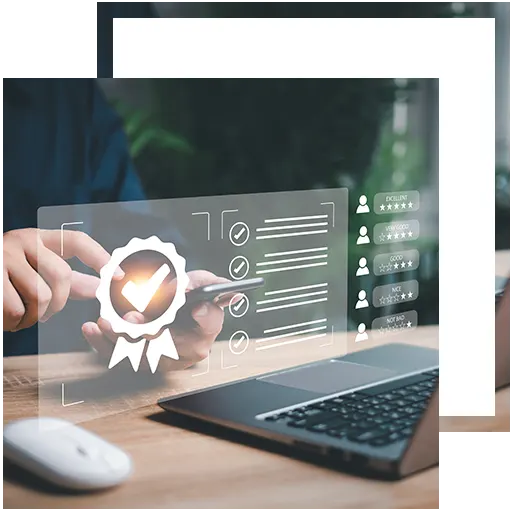
By providing customers with an optimal product experience, you will be able to access a higher profitability. Delivering on your brand promise is critical if you want to strengthen the bond between customers and your company while building loyalty.
If you are having trouble assessing your customers’ needs, you can use software like PIM Goaland to deliver an innovative and competitive product experience.
Marketing actions
The levers of success!

Advertising campaign
The advertising campaign defines a strategy to give it meaning. Create original and creative campaigns.

Social networks
There are three main categories of social networks: socio-professional networks, entertainment and exchange networks.

Sales strategy
Deploy your business strategy by choosing blended marketing, identifying your business target.
Everything you need to know to succeed in marketing
Brand Reputation
Logo, brand image & branding
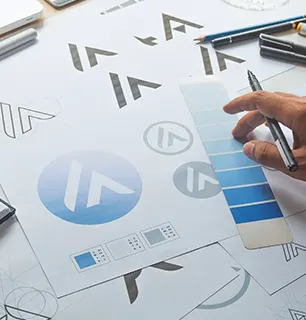
In addition to being easily recognizable, typography is an indispensable tool for differentiating elements. It is chosen to trigger positive emotions among consumers. Branding is the lever of your brand image. As for the logo, it reflects the values and message of your company.


Webmarketing and SEO
The tools of referencing
Natural referencing
Improve the positioning of a site by working on its natural referencing also called SEO or organic referencing.
To please Google’s algorithm, an SEO campaign includes the editorial and technical optimization of the pages of a site to be referenced. This tool is essential to develop your company.
Adwords campaigns
To enjoy an effective SEO campaign, you need to have a powerful web portal.
Use Adwords campaigns to reach new customers. To achieve this, your digital portal must be designed in such a way to turn your prospects into customers.
Multilingual websites
A multilingual website is effective when you develop individual strategies for each language or culture.
Available in multiple languages, this type of site can be useful when targeting people who are not fluent in your native language.
The Net Promoter Score
The measurement of customer satisfaction
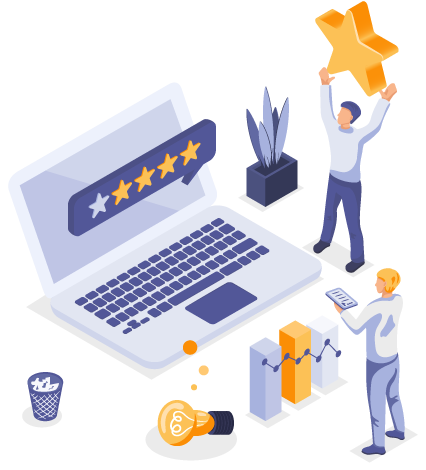
The NPS or Net Promoter Score is a technique for measuring customer satisfaction or dissatisfaction as a key indicator. Many leading companies in their fields use this strategy.
Benchmarks are reference points that make it easier to orientate oneself, whatever the sector. The NPS is an indicator to evaluate the overall satisfaction of a consumer as well as his loyalty to the brand.
Product marketing is vital for any business that wants to succeed. By segmenting your products, you can more effectively target your audience and improve your chances of making a sale.
Why do you need a PIM?
Product marketing is the process of creating a strategy and messages to promote and sell a product. Segmenting your product marketing allows you to focus your efforts on the most promising market segments, and to tailor your messages to appeal to each segment. More on goaland.com.
There are many reasons to segment your product marketing. Perhaps you want to focus on a particular market segment that is most likely to buy your product. Maybe you want to appeal to a segment that is most likely to be interested in your product. Or you might want to focus on a segment that is most likely to be profitable for you.
Whatever your reason for segmenting your product marketing, it is important to do it carefully. You don’t want to segment too narrowly, or you will miss out on potential customers. But you also don’t want to segment too broadly, or you will end up with a message that is too general to be effective.
The best way to segment your product marketing is to start with your goals. What are you trying to achieve with your product marketing? Once you know your goals, you can identify the market segments that are most likely to help you achieve those goals.
From there, you can develop messages that are tailored to each segment. Remember, your goal is to appeal to your target market, so make sure your messages are relevant to them.
If you take the time to segment your product marketing, you will be able to focus your efforts on the most promising market segments and develop messages that are more likely to resonate with them. As a result, you will be more likely to achieve your goals and sell more products.
The Benefits of Segmentation
Product marketing is the process of creating and delivering marketing programs that drive customer demand and ultimately revenue for a company. In order to be successful, product marketing teams must segment their audiences, target their messaging, and align their activities with the overall marketing strategy.
Segmentation is the process of dividing a market into distinct groups of customers with similar needs, characteristics, or behavior patterns. Segmentation allows companies to better understand their customers and develop more targeted marketing programs. There are many benefits of segmentation, including:
• Increased customer understanding: Segmentation allows companies to develop a more in-depth understanding of their customers. By segmenting customers, companies can learn about their needs, wants, and motivations. This understanding can be used to develop more targeted marketing programs.
• Improved customer targeting: Segmentation allows companies to target their marketing programs more effectively. By targeting specific segments of customers, companies can improve the effectiveness of their marketing campaigns and see better results.
• Increased customer engagement: Segmentation can also lead to increased customer engagement. When customers are targeted with relevant messages, they are more likely to engage with the company. This increased engagement can lead to improved customer loyalty and higher sales.
• Cost savings: Segmentation can also lead to cost savings. By targeting specific segments of customers, companies can reduce the amount of money they spend on marketing. This can lead to increased profits and a more efficient use of resources.
Product marketing is a vital part of any company’s marketing strategy. Segmentation is a key tool that can be used to improve the effectiveness of product marketing programs. The benefits of segmentation include increased customer understanding, improved customer targeting, increased customer engagement, and cost savings.
The Different Types of Segments
Differentiating your product is essential to marketing. By definition, product segmentation is “the process of dividing a market into distinct subsets of consumers with similar needs and wants that can be targeted with a distinct marketing strategy.” In order to identify these segments, market research is key. This can be done through surveys, interviews, and focus groups.
There are four main types of product segments:
-Geographic: This is probably the most common form of segmentation. It divides the market by location, whether that be by country, region, city, or even neighborhood.
-Demographic: This segmentation is based on personal characteristics such as age, gender, income, occupation, education, religion, and family size.
-Psychographic: This looks at lifestyle choices and personality traits. It can be helpful to think of it in terms of interests, opinions, and attitudes.
-Behavioral: This segmentation is based on customer behavior, such as benefits sought, usage rate, loyalty, and readiness to buy.
How to Create Segments
As a product marketer, your job is to bring your product to market and ensure its success. In order to do this, you need to understand your target market and segment it accordingly.
There are a number of ways to segment a market, but the most common is by demographics such as age, gender, income, and location. However, you can also segment by psychographics, which looks at lifestyle factors, and by behaviours.
Once you have segmented your market, you can then start to think about how to reach each segment. This is where your marketing mix comes in, as you will need to consider what channels to use, what messages to send, and what offers to make.
By segmenting your market and tailoring your marketing mix accordingly, you will be in a much better position to succeed.
Artificial intelligence is transforming marketing by automating tasks, providing new insights into customer behavior, and personalizing engagement at scale. By automating tasks such as email marketing, social media, and website maintenance, marketing teams can focus on higher-level strategic tasks. Additionally, AI provides new insights into customer behavior by analyzing large data sets to identify trends and patterns. Finally, AI is being used to personalize engagement at scale by automatically tailoring messages and content to individual customers.
The Impact of Artificial Intelligence on Marketing
In recent years, artificial intelligence (AI) has begun to transform many industries, and marketing is no exception. AI can help marketers automate repetitive tasks, such as data entry and email marketing. It can also help them analyze large data sets to identify patterns and trends. Additionally, AI can be used to generate personalized content and recommendations.
AI is changing the way marketing is done in several ways. First, it is making it possible to personalize messages and content at scale. This is because AI can analyze large data sets to identify patterns and trends. Additionally, AI can generate personalized content and recommendations. This is possible because AI can understand natural language and identify the intent of a user’s search.
Second, AI is changing the way marketing is planned and executed. AI can help marketers automate repetitive tasks, such as data entry and email marketing. Additionally, AI can be used to create and test marketing campaigns. This is possible because AI can identify the best time to send a message and the best channels to use.
Third, AI is changing the way marketing is measured. AI can help marketers track and measure results in real-time. Additionally, AI can help marketers identify which marketing activities are most effective. This is possible because AI can track user behavior and identify patterns.
Overall, AI is having a major impact on marketing. It is changing the way marketing is done in several ways, including personalization, planning, and measurement. Additionally, AI is making it possible to automate repetitive tasks and to create and test marketing campaigns.
How Artificial Intelligence is Transforming Marketing
Artificial intelligence is one of the most transformative technologies of our time. With AI, businesses can automate many manual tasks, including those in marketing.
AI is changing the way businesses interact with customers and prospects. It’s also helping marketers make sense of the ever-increasing volume of data we collect about our customers and prospects.
AI-enabled marketing tools can automate repetitive tasks, such as email marketing, social media posts, and targeted ads. They can also help you personalize your marketing messages and content.
In addition, AI can help you segment your audience, identify influencers, and track your marketing ROI.
AI is still in its early stages, but the potential for transformative change is great. As AI evolves, so will the way businesses market to their customers.
The Benefits of Artificial Intelligence for Marketing
There are many benefits of artificial intelligence for marketing. With the help of AI, marketers can automate repetitive tasks, such as customer segmentation, lead scoring, and email marketing. AI can also help marketers to personalize their messages and improve their targetting. In addition, AI can help marketers to optimize their campaigns and track their ROI.
The Future of Artificial Intelligence in Marketing
As artificial intelligence (AI) increasingly permeates every aspect of our lives, it’s inevitable that its impact will be felt in the world of marketing. In fact, AI is already transforming marketing, and the changes we’re seeing are just the tip of the iceberg.
In the near future, AI will change the way we create and execute marketing campaigns. It will help us to better understand our customers and personalize our messages to them. AI-powered chatbots will become our new customer service reps, and we’ll use AI to track and optimize our campaigns in real-time.
In the long term, AI will completely change the landscape of marketing. As AI gets better at understanding human behavior, it will be able to take on more and more of the tasks currently performed by human marketers. We’ll see the rise of the “machine marketer” who is able to manage entire campaigns on their own, with little or no input from humans.
This may sound like a scary prospect, but it doesn’t have to be. The future of AI in marketing is exciting and full of possibilities. As AI redefines what marketing can be, we have the opportunity to create more effective, efficient, and personal campaigns than ever before.